
Searching the Hill County Court Docket
Know what you're asking for before you start. A docket is the running record of a case. A calendar lists scheduled events. A filed document sits in the deeper case file. Felonies, major civil suits, family matters, and tax cases all live with the Hill County District Clerk. So does any other district or county-level matter. A city citation goes to the municipal court named on the ticket. Justice-court filings stay with their precinct court. One caution: the District Clerk states plainly that it keeps no traffic-ticket records. Before any Hill County docket search, gather the full public party name. Bring the cause number if you have it, plus the rough filing date and the case type. Then take the official route.
- Identify whether the matter belongs to the District Clerk, County Clerk, a justice court, or a municipal court.
- Open the official Hill County route and try the local court portal with only the fields it displays.
- For supported civil records, compare the result with the Texas electronic research system.
- Read the court, cause number, status, filings, and settings shown, not merely the matching name.
- If no record appears, ask the responsible clerk about a counter search, mail, email, or public terminal.
An empty result proves nothing. Older files, brand-new filings, municipal matters, juvenile records, sealed cases, and anything outside the electronic feed can stay hidden from view.
Hill County Docket Portal Layers
Hill County runs more than one electronic door. The Tyler Court's Portal, linked from the county, is the named local case-information endpoint. The District Clerk also steers civil researchers to re:SearchTX, which opens case, filing, document-text, and hearing collections depending on your role and the data available. Treat these systems as complements, not copies. Neither one promises full coverage of every Hill County court docket. The Hill District Clerk records-search page shows how online lookup connects to a clerk request.
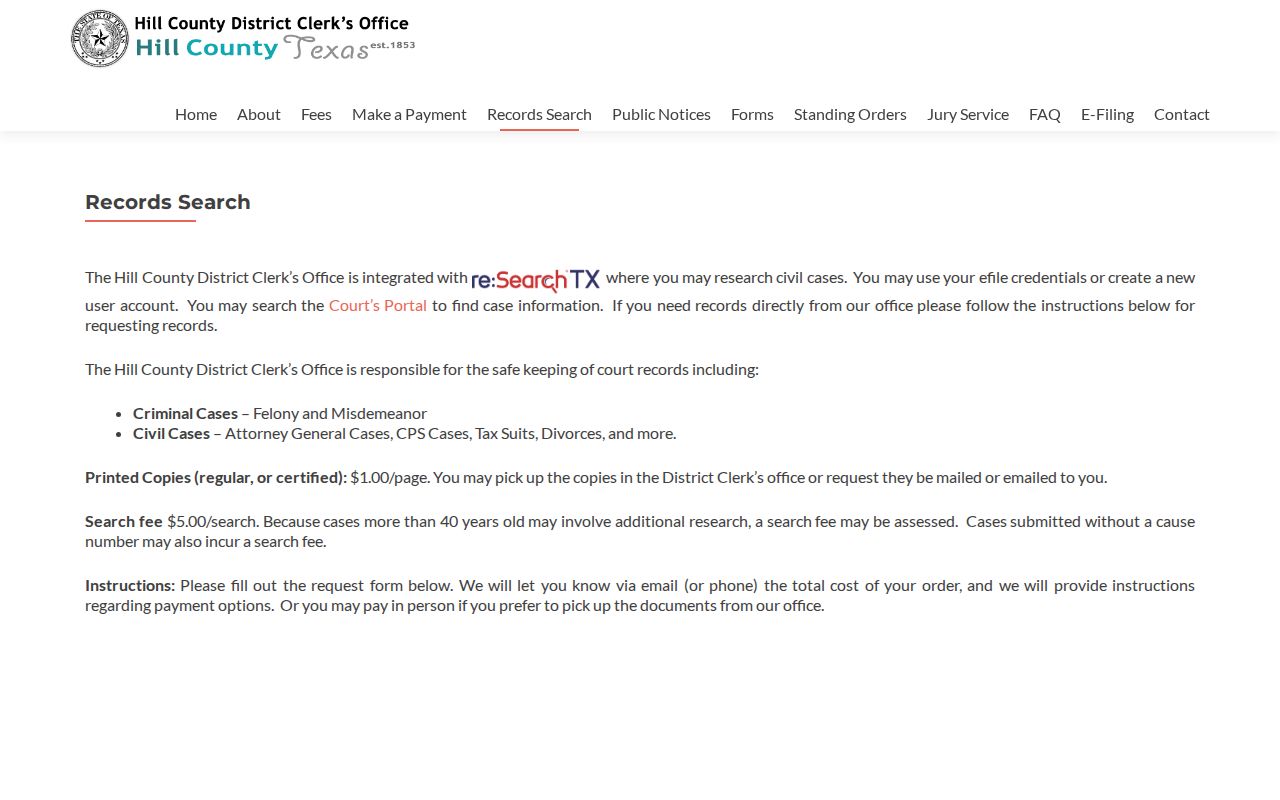
A portal shows case information. The clerk supplies the regular or certified copy. Exact Tyler fields, filters, guest rules, and document fees vary, so trust only what the live portal presents. Never guess a format or hand private data to an unofficial service.
Inside a Hill County Court Docket
Think of a Hill County court docket as a dated trail. It confirms that a case was filed. It shows which court holds it, what event was recorded, and whether a hearing was set. What you see is not always the full pleading, exhibit, order, or judgment. Some entries just name a document or action. A certified copy takes a separate clerk process.
| Cause Number | The court's case identifier and the best search key when known. |
|---|---|
| Court and Type | The court of record and a civil, family, felony, misdemeanor, probate, or municipal category. |
| Party and Counsel | Public names and attorney details when access rules permit display. |
| Filed Events | Dated petitions, answers, motions, notices, returns, orders, and judgments. |
| Settings | Hearing date, time, type, judge, courtroom, or remote notation when posted. |
| Status | An open, pending, inactive, disposed, dismissed, or other court-supplied label. |
Read each field in context. "Disposed" is only a status, not a plain account of the outcome. "Reset" means an event moved; it does not end the case.
Hill County Docket Terms Decoded
Words that sound alike can point to different parts of the local record. Keeping them straight helps the clerk understand your request and keeps a court docket search on target.
- Docket
- The chronological register of events and filings.
- Case search
- The tool or index used to locate a case.
- Setting
- A scheduled hearing, pretrial event, docket call, or trial.
- Reset
- A change from one scheduled date to another.
- Certified copy
- A copy authenticated by the clerk, usually with certificate and seal.
This vocabulary explains why a picture of a docket row may not satisfy a request for a filed order. Name the document and say whether certification is needed.
Courts That Keep Dockets in Hill County
The right Hill County court docket depends on jurisdiction. That means the court's legal authority over the case. The 66th Judicial District Court handles district-level matters. County Court at Law and the constitutional County Court or Probate Court have separate duties. Four justice courts and several city municipal courts keep lower-court records. Appeals go to the Tenth Court of Appeals in Waco. Federal cases use a separate system.
| Court | Docket Covers | Where to Search |
|---|---|---|
| 66th District Court | Felony and district civil, family, juvenile, tax, and related matters | District Clerk and local portal |
| County Court at Law | County criminal and civil matters within its authority | District Clerk and court office |
| County and Probate Court | Constitutional county and probate work | Proper county or probate custodian |
| Justice Courts 1-4 | Small civil, eviction, and many fine-only matters | Named precinct clerk |
| Municipal Courts | City ordinance and many city-issued citations | Issuing city's court |
The official county directory provides court-specific routing.
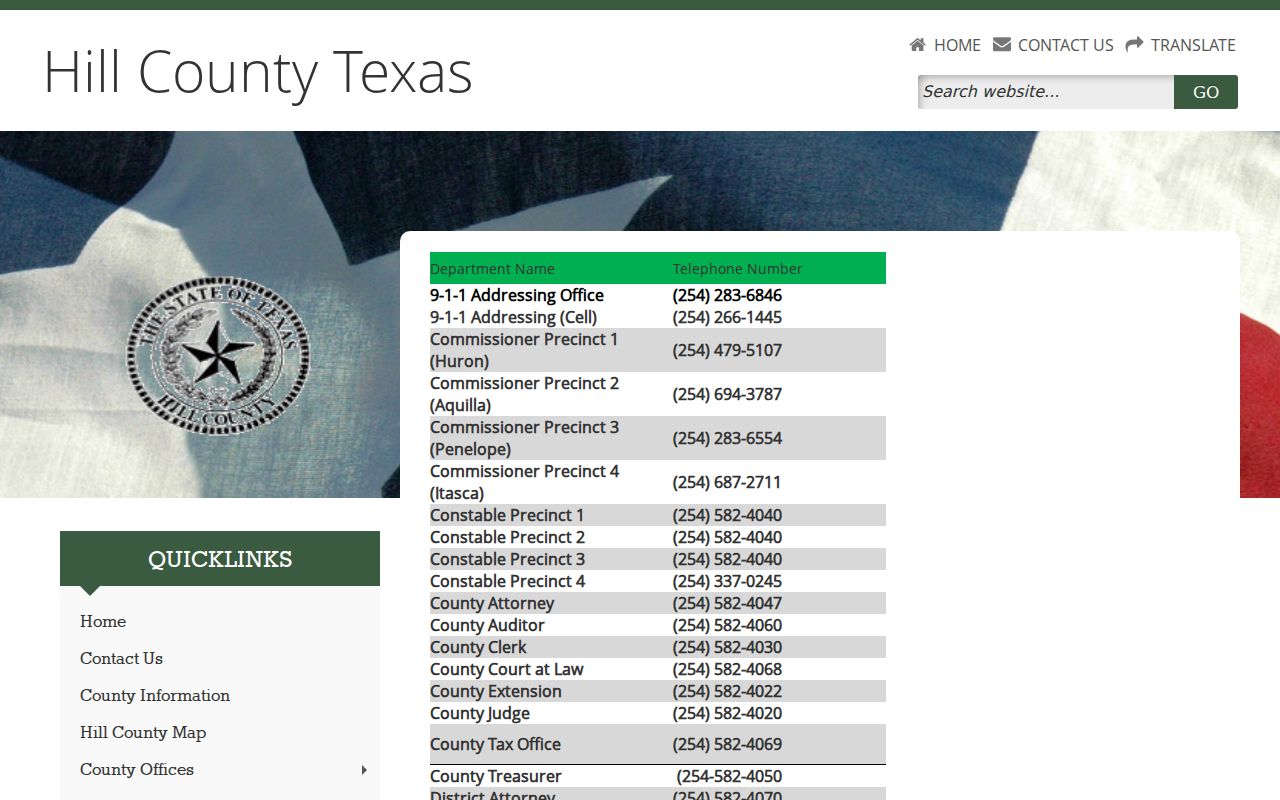
Use the court named on your notice or citation. Similar office names never make their records interchangeable.
Hill County Docket Courthouse History
Every Hill County court docket has a physical home. The active courthouse in Hillsboro gives the calendar a street-level setting. Texas Historical Commission records call the 1890 building a W. C. Dodson design. It is rusticated limestone with a prominent clock tower. Hill County itself was organized in 1853, with Hillsboro chosen as the county seat. The courthouse still works as a public building, not just a historic showpiece. The Texas Historical Commission courthouse record carries the historical details.
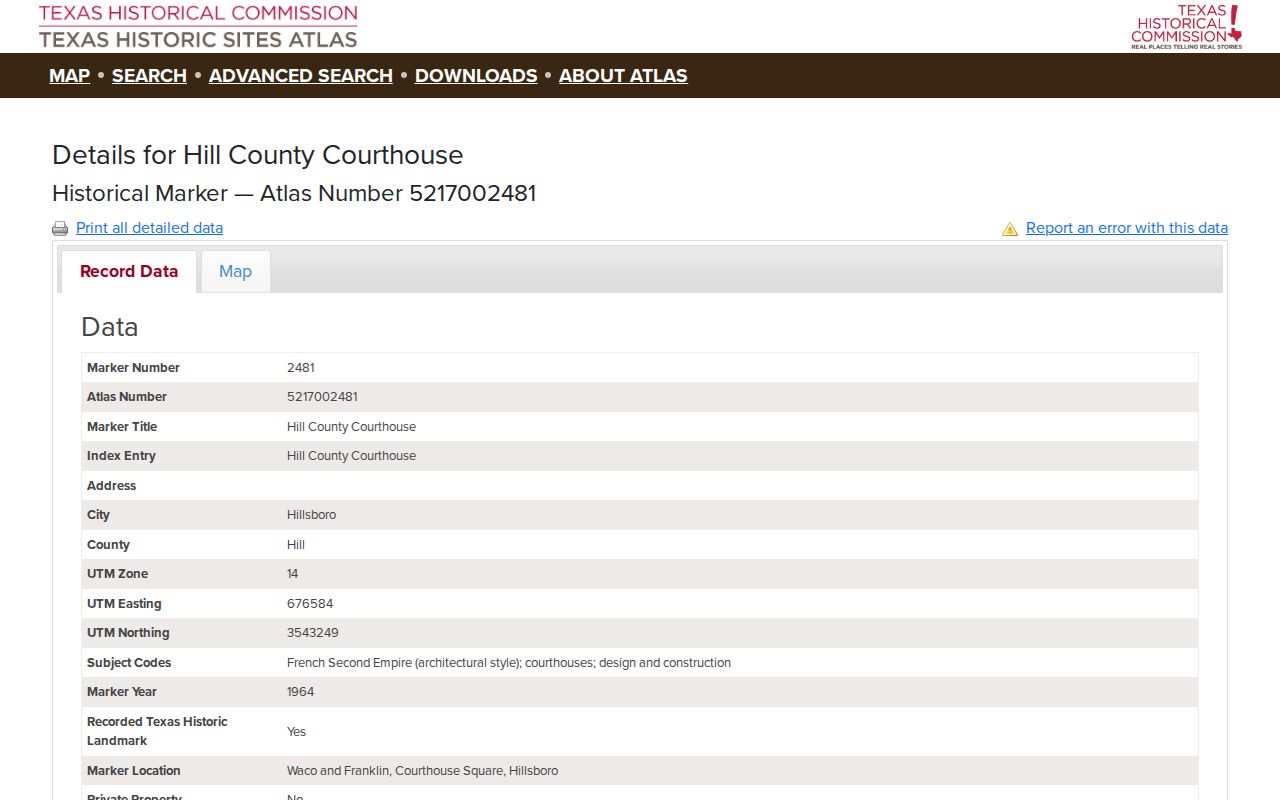
The record tells of a destructive New Year's Day fire and the reconstruction that followed. Official materials disagree on the date, 1993 versus 1996, and that conflict stays visible. Today, confirm the historic courthouse and District Clerk counter addresses with the office you actually need.
How to Find Court Dates and Settings
A setting can surface in several places. Try a portal, a filed notice, a municipal calendar, or a court coordinator schedule. Current 66th District Court policy demands a completed e-filed notice. Without it, the coordinator will not put a hearing on the calendar. County Court at Law posts its own remote-hearing rules. Public viewers may request access from that court. Recording its video or audio is prohibited. Check the date, time, court, judge, setting type, and any room or remote detail. Then confirm with the clerk or coordinator. Online calendars shift, and a reset can post after an earlier notice went out. The Hill District Clerk can help by counter, phone, email, or mail when the record is unclear. City and justice-court dates must be confirmed with that lower court directly. More detail sits in Hill County Court Dates. A listed setting is never final proof the hearing will happen at that time.
When a Hill County Docket Is Missing
No case in the results? Test jurisdiction first. A ticket may belong to a municipal or justice court. A federal filing lives in PACER. Probate can require routing between the probate court and County Clerk. Juvenile, sealed, restricted family, and newly filed matters all carry access or timing limits. The Texas Judicial Branch custody explanation notes something useful. Its administrative office holds no individual trial-court files.
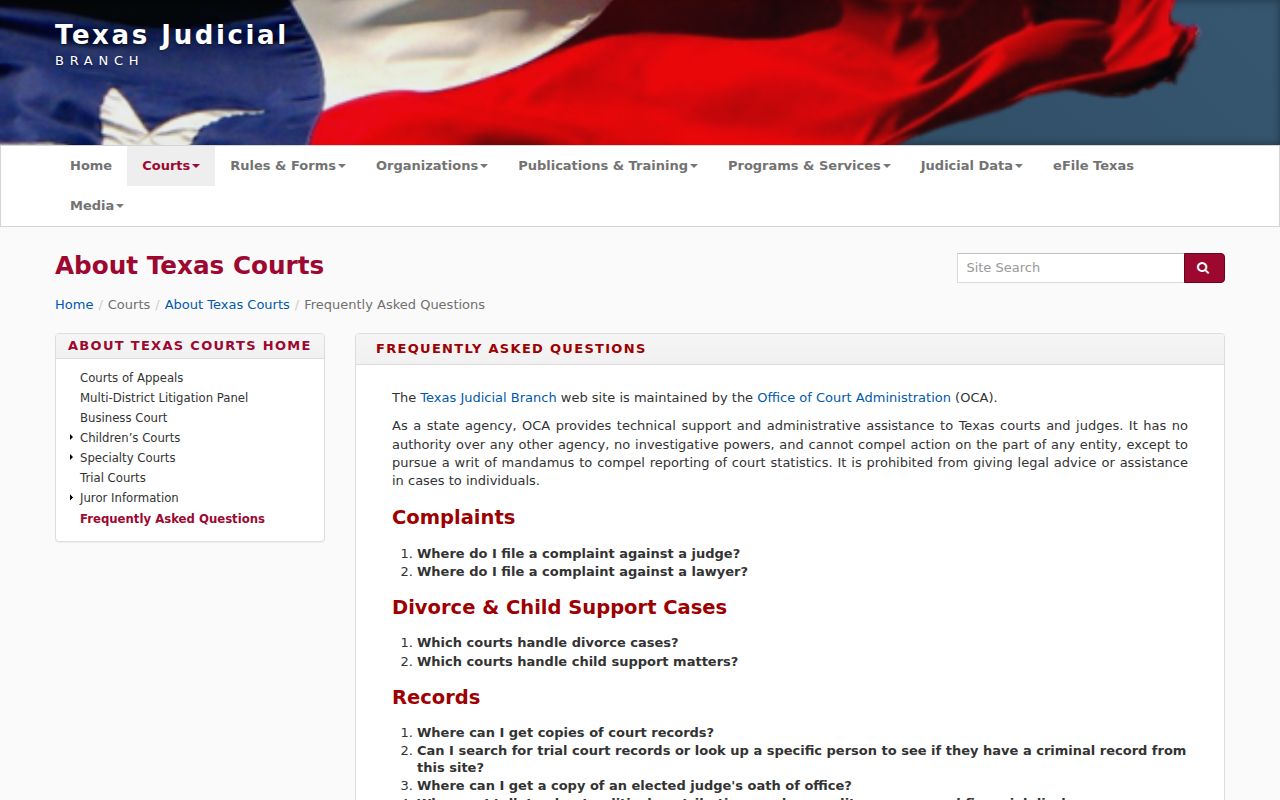
No cause number? The clerk can still search. Give full public names, the case type, and a date range, and expect a $5 search fee when the cause number is missing or the case is more than 40 years old. Ask for the total cost before you order copies.
Public Access to Court Dockets
Getting a Texas court docket depends on the record type and who holds it. The Texas Public Information Act does not govern courts the way it governs executive agencies. Rule 12 covers judicial records. Yet it leaves court case records out of its definition. So local procedure still controls. Sensitive data, juvenile material, sealed files, and certain orders can limit online display or release.
Key Texas access rules:
Texas Rule of Judicial Administration 12 sets a judicial-record framework and exclusions.
Texas Rule of Civil Procedure 21c requires redaction of specified sensitive data.
Texas Government Code Section 552.021 grants public-information access, subject to exceptions and the court-record boundary.
Texas Family Code Chapter 58 protects juvenile justice information.
Access is not unrestricted online display. Ask the Hill County clerk's office what can be inspected, copied, or certified, and which rule controls each record.
Hill County Docket Copies Compared
Online docket information helps you find cause numbers, courts, entries, and settings. It is not a clerk-authenticated record. Hill's 2026 schedule prices noncertified paper copies at $1 per page, while certified copies add $5 for the certificate and seal plus $1 per page. Fees are nonrefundable, and the office gives the total and payment instructions after a request.
| Record Form | Use | Charge |
|---|---|---|
| Portal information | Locate available case entries | Varies by portal and role |
| Noncertified copy | Plain available document | $1 per page |
| Certified copy | Authenticated copy | $5 plus $1 per page |
| Clerk search | Incomplete details or old case | $5 where applicable |
Say whether you need the docket sheet, a named filing, an order, or a judgment. Request certification only when it is required.
Docket Records at the Clerk's Office
Marchel M. Eubank is the Hill County District Clerk. Her office holds the files and dockets for the 66th Judicial District Court, the County Court at Law, the County Court, and Title IV-D Court No. 17, across the subjects the county lists. It records court actions, assigns cases, issues writs and citations, and collects court funds. Need current routing? The official District Clerk page posts the office's contact and service details.
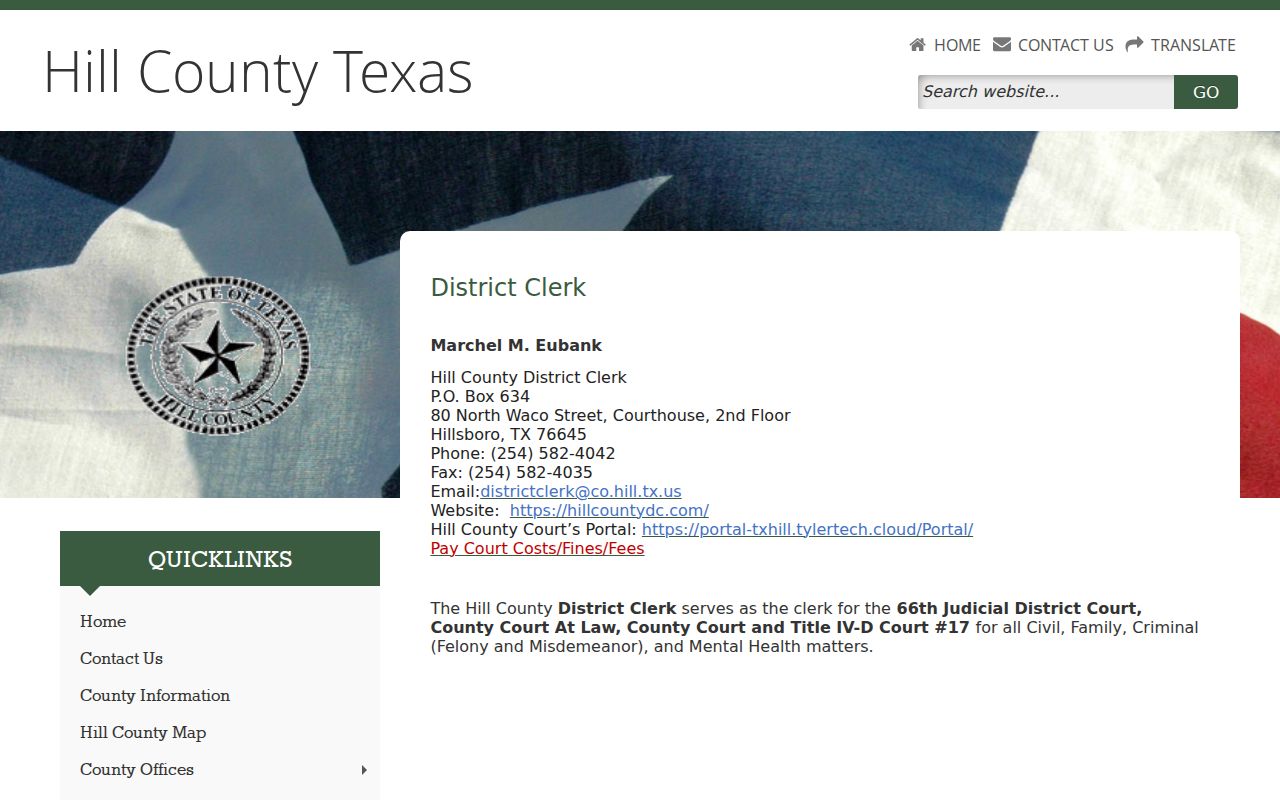
The office confirms the difference between electronic lookup and clerk service.
Hill County District Clerk
80 North Waco Street, Courthouse, 2nd Floor
Hillsboro, TX 76645
Mail: P.O. Box 634, Hillsboro, TX 76645
254-582-4042
Email: districtclerk@co.hill.tx.us
The County Clerk is a separate office that keeps land, vital, probate, and other assigned records. Its land portal is not a countywide docket search.
Hill County Docket Filing Systems
eFileTexas files documents; it is not a general public case lookup. Hill County requires attorneys to e-file specified civil, family, and criminal filings. A submission may create a docket entry later. Even so, the filing portal and public research tools do different jobs. A payment page is not necessarily a docket, viewer, or calendar. Start with the local court portal for Hill County case information. Use re:SearchTX for supported research. Use eFileTexas only when an authorized filer submits a document. Need copies or unclear results? Return to the District Clerk or the lower court that holds the case. Portal names describe functions only. They do not guarantee the same records, fields, or access.
Hill County Docket Activity Context
Official municipal statistics give context without describing any person. In fiscal year 2024, Texas reported 5,258 cases added for Hillsboro, 4 for Whitney, 1,890 for Itasca, and 1,524 for Hubbard. They are activity fields. Not counts of unique people or convictions. Blum shows no row at all. That gap does not prove the city lacks a citation process, and the FY2024 statistical index is the source.
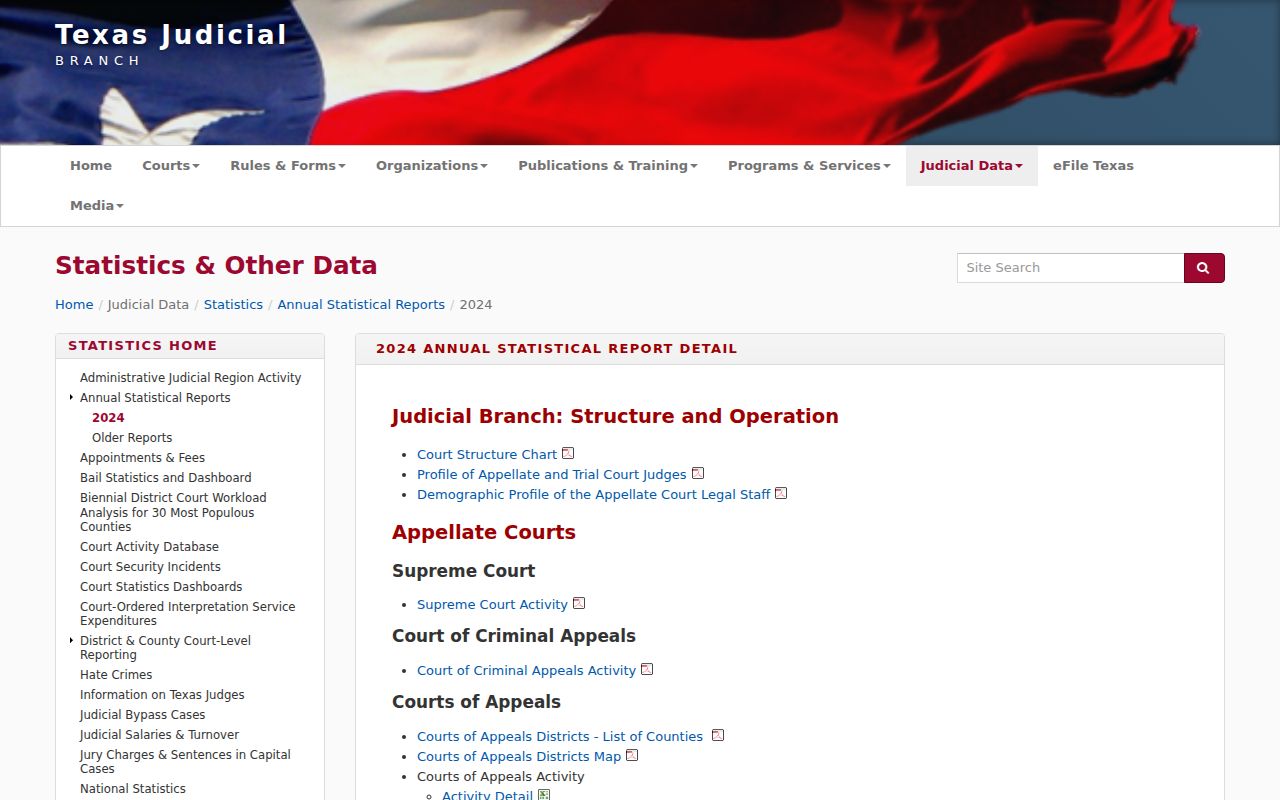
Jurisdiction still comes first. City activity does not land in the District Clerk search just because it happened in Hill County.
Hill County Court Dockets by City
The official 2020 ranking names five largest incorporated cities. They are Hillsboro, Whitney, Itasca, Hubbard, and Blum. Access differs from city to city. Hillsboro publishes documents and settings. Whitney routes citation questions through its court. Itasca lists payment and compliance channels. Hubbard supplies a court contact, while Blum offers a city-hall fallback. Blum has no confirmed public municipal docket page.
Always read the court printed on the citation. The city name alone does not choose among municipal, justice, or county court.
Hill County Docket Request Routes
When the online Hill County court docket falls short, the District Clerk offers several direct routes. Visit the public counter. Mail a request to P.O. Box 634, send an email, call, or use the published Records Search Request form. The form asks for requester contact details, the case subject's public name, criminal or civil case type, and the cause number when known. It also wants a month-and-year range, a delivery choice, and comments. Date of birth is only for separating similar names. Criminal requests may list an alias. The form expressly allows that detail in the comments.
Choose pickup, mail, or email based on what the clerk can provide. The records-search page says staff will call or email with the total cost and payment instructions. In-person payment works. So does a money order mailed with the name and cause number, or an online card processor. Card processing can add a convenience fee. Do not mail cash. Do not assume that paying for a search also pays for each page or certification.
Lower courts use their own channels. Call the precinct justice clerk. That covers a JP matter. Contact the named municipal court about a city citation. The County Court at Law can supply remote-hearing access information for a public proceeding, but its published rules prohibit recording. Check current office availability and holiday closures before a courthouse trip. The fallback chain runs: portal, specific clerk, written request, counter or terminal, then the court coordinator when the question concerns a setting rather than a copy.
Map and Directions to the Hill County Courthouse
District Clerk Marchel M. Eubank keeps the 66th Judicial District Court's felony, family, and civil files, along with County Court at Law and Title IV-D Court No. 17 records, on the second floor of the 1890 Hill County Courthouse at 80 North Waco Street in Hillsboro. The County Clerk's land, vital, and probate records sit on a different floor of the same limestone building, so the record type decides which counter to visit.
Hill County District Clerk
80 North Waco Street, Courthouse, 2nd Floor
Hillsboro, TX 76645
Mail: P.O. Box 634, Hillsboro, TX 76645
254-582-4042
The District Clerk's office publishes its own list of 2026 holiday closures, so call 254-582-4042 or check the current notice before a trip, since hours and closures can change.